The Hidden Trance: The State That Keeps Anxiety Alive

The anxiety survived everything you threw at it. It survived the breathing exercises, the journals, the courses, the affirmations, and every promise that the next method would be the one. It survived because none of those methods touched the state you were in while using them. That state has a name.
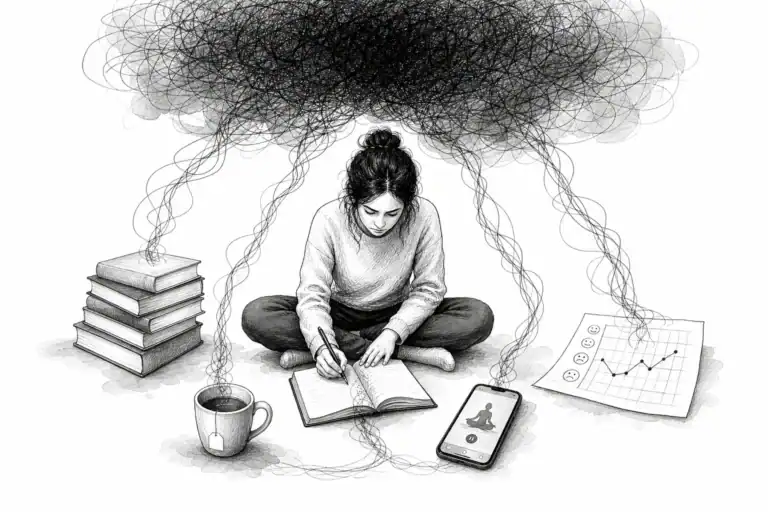
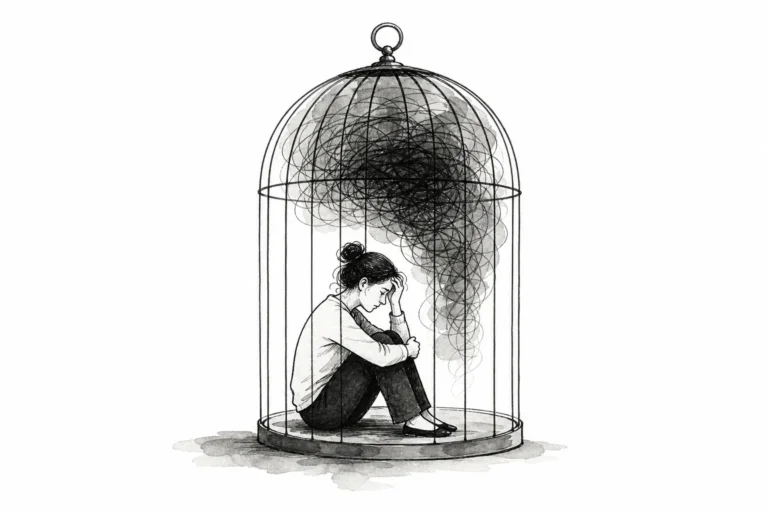
The hidden trance is a state of absorbed, automatic attention in which a person continuously monitors, evaluates, and tries to repair their own inner experience. It feels like self-awareness and responsibility. It functions as hypnosis: a narrowed focus organized around a single accepted suggestion, the idea that something inside you is wrong and needs fixing. The term comes from the book Stop Fixing Yourself: The Hidden Trance That Keeps Anxiety Alive by Timoteo Crnković, and this article is its full definition.
Trance means something simpler than you think

Forget the swinging watch. In the Ericksonian tradition of hypnotherapy, a trance is an ordinary state with three features: attention narrows onto one thing, awareness of everything outside that thing fades, and responses start running automatically. Milton Erickson spent his career pointing out that people drift in and out of such states all day. You drive twenty minutes and remember nothing of the road. You look up from your phone and forty minutes are gone. A film ends and for a few seconds the room feels unfamiliar.
Nothing about those states is exotic. What makes a trance consequential is the suggestion it carries. A film carries a story, and when the film ends the story ends with it. The hidden trance carries something stickier: a claim about who you are. And unlike a film, it has no credits. It runs in the background for years, and the person inside it calls it working on myself.
How the hidden trance forms
It begins with a sentence that gets accepted without examination. Something is wrong with me. The sentence usually arrives at a vulnerable moment: the first panic attack, a stretch of insomnia, a breakup, a season of comparing yourself to people who seemed to be doing life correctly. Vulnerable moments are precisely when the mind is most open to suggestion. Hypnotherapists build careful inductions to create that openness on purpose… life creates it by accident, and then delivers the worst possible sentence into it.
Once accepted, the sentence behaves like a post-hypnotic suggestion. It directs behavior while staying out of sight. Buying the self-help book obeys it. The 5 a.m. routine obeys it. Checking your chest for tightness before you are fully awake obeys it. Every act of fixing carries the same silent premise, and every repetition confirms the premise a little more deeply. The fixing is not a response to the trance: the fixing is the trance, performed.
This is why the person rarely notices. A trance is hard to see from inside, and this one disguises itself as virtue. Self-monitoring looks like mindfulness. Symptom research looks like education. The growing shelf of methods looks like commitment. From outside, a pattern is visible. From inside, there is only the next honest attempt.
The loop, in slow motion
Three mechanisms keep the trance running, and each has research behind it.
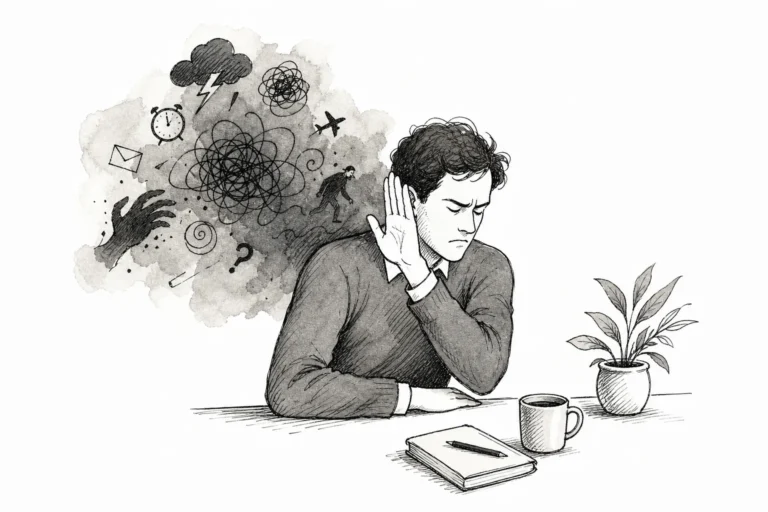
The first is monitoring. When your goal is to catch anxiety early, part of your mind scans for it continuously, and a scanner tuned to threat will find threat in ordinary bodily noise. Daniel Wegner’s work on the thought suppression effect showed the machinery: the monitoring process that checks whether an unwanted thought is gone keeps that exact thought warm and accessible. Inside the hidden trance, monitoring feels like vigilance. In practice it is rehearsal.
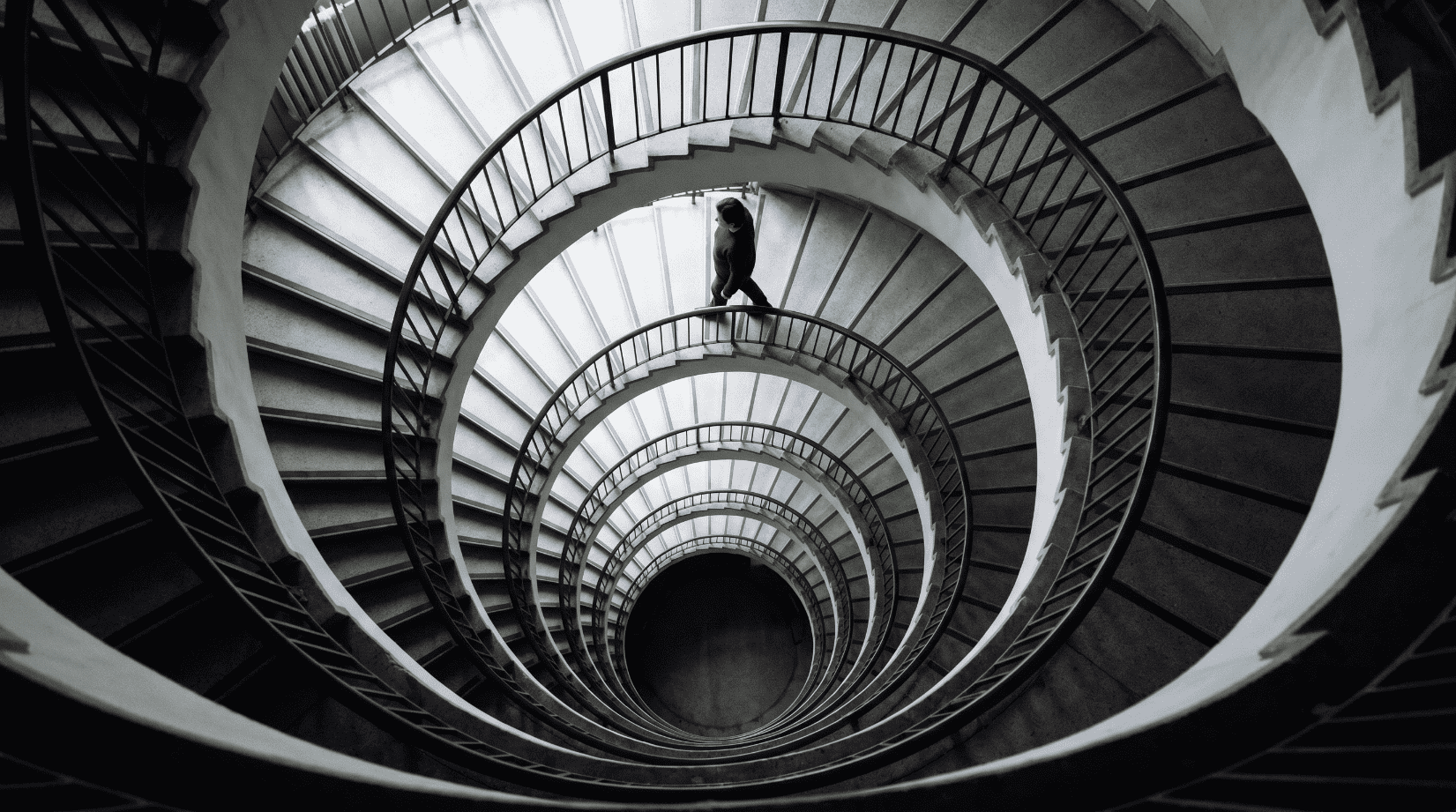
The second is the fix itself. Every technique deployed against anxiety sends one message down into the nervous system: the threat is real and it is still here. Suppression, safety behaviors, and reassurance-seeking all confirm the danger they are meant to manage, which is why trying to fix anxiety makes it worse over time rather than better. Inside the trance, each failed technique reads as personal failure, and personal failure feeds the founding suggestion… something really must be wrong with me, look how nothing works.
The third is the industry built on top of the first two. Self-improvement content supplies an endless stream of new methods, and each new method quietly restates the premise that you need one. The evidence on self-help and anxiety is sobering: pooled effects on anxiety are small and, in the landmark meta-analysis, statistically indistinguishable from chance. For someone in the hidden trance, that stream of methods works like a hypnotist who never stops talking.
Signs you are in the hidden trance
You rate your days. You check your body before you are fully awake. A calm week makes you suspicious, because calm means the anxiety must be planning something. You know more about anxiety than about any hobby you have. Decisions wait until you feel ready, and ready keeps moving. There is a technique for every situation, and a backup technique for when the first one fails. Somewhere along the way, getting better became the project of your life… and life became the thing scheduled to start afterward.
One more sign outranks the rest. Reading a list like this, your first instinct was to use it: to score yourself, to add it to the file, to fold it into the project. That instinct is the trance reaching for new material. It can absorb anything, including descriptions of itself.
Why more effort deepens it
Here the hypnotic frame stops being a metaphor and starts doing real explanatory work. In hypnosis, effort exerted inside the frame deepens the frame. A person told their arm is too heavy to lift will push against the heaviness, and the pushing itself becomes proof of it. The hidden trance runs on the same physics. Working harder on yourself is effort inside the frame of something is wrong with me, so the harder you work, the more real the wrongness feels.
This resolves the puzzle that brings most people to this site. The most diligent people are often the most stuck. Their diligence was never the missing ingredient: it was the deepening mechanism. Escaping a trance using the trance’s own logic tightens it, the way struggling in deep water exhausts a swimmer faster than the water does.
What breaks a trance

A trance ends by interruption, and interruption starts with recognition. The moment a suggestion is seen as a suggestion, it loses its automatic quality. It becomes a sentence someone once accepted rather than a fact about the world, and a sentence can be examined in a way a fact never invites. Some people feel a real shift at exactly this point: the frame becomes visible, and a visible frame stops organizing everything inside it.
For patterns that have run for years, recognition usually needs help from outside the frame, because the mind doing the recognizing is the same mind the trance has been training. This is where Ericksonian work turns inside out. The classical picture has a hypnotherapist inducing trance in a client who arrives in a normal state. Here the client arrives already hypnotized, absorbed for years in the suggestion that they are broken, and the work runs in the opposite direction: pattern interruption, reframing, and the deliberate dismantling of the founding suggestion. Less an induction than a waking up. Timoteo Crnković, author and conversational hypnotherapist, works with people online in exactly this frame, and the research foundations behind the approach are laid out on the Science behind the book page.
One warning belongs here, and the book states it bluntly. Breaking the hidden trance can itself be recruited as the next self-improvement project. The person who spent years collecting techniques will happily collect de-hypnosis as technique number forty-one. The way this work stays honest is by subtraction: it removes the compulsion to fix rather than installing a better fix. If an approach hands you homework, daily exercises, and a progress tracker for escaping the trance of self-monitoring… it has already lost the plot.
Where the term comes from
The hidden trance is the central concept of Stop Fixing Yourself: The Hidden Trance That Keeps Anxiety Alive, first published in Croatian as Prestani raditi na sebi and drawn from years of Ericksonian hypnotherapy practice with people whose anxiety had outlasted every method they tried. The book moves through recognition, destabilization, reframing, and integration of the pattern, and it carries no techniques, no exercises, and no steps… by design, for the reasons this article has laid out. The first chapter is available free by email.

If this article read less like new information and more like a description of your last few years, that recognition is where the work begins. The book continues it.
Frequently asked questions about the hidden trance
What is the hidden trance?
The hidden trance is a state of absorbed, automatic attention in which a person continuously monitors and tries to repair their own inner experience. It is organized around one accepted suggestion, the belief that something inside is wrong and needs fixing, and it keeps anxiety alive by treating every sensation as evidence for that belief. The term was introduced by Timoteo Crnković in the book Stop Fixing Yourself.
Is the hidden trance the same as hypnosis?
It is an everyday form of it. In the Ericksonian view, a trance needs only narrowed attention, faded peripheral awareness, and automatic responding, and those three arise naturally whenever a suggestion gets accepted at a vulnerable moment. A stage, an induction, or a hypnotist are optional. Life supplies the induction on its own.
What keeps the hidden trance running?
Three mechanisms: constant self-monitoring, which keeps the anxious signal warm; the fixing itself, which confirms to the nervous system that a threat is real; and the steady supply of new self-improvement methods, each of which restates the premise that you need one. Effort inside the trance deepens the trance, which is why the most diligent people are often the most stuck.
How do I know if I am in the hidden trance?
Common signs include rating your days, scanning your body for symptoms before fully waking, feeling suspicious of calm periods, postponing decisions until you feel ready, and organizing life around getting better rather than living. The strongest sign is the instinct to turn even this description into new self-improvement material.
How does the hidden trance end?
By interruption rather than force. When the founding suggestion is recognized as a suggestion instead of a fact, it loses its automatic power. Long-running patterns usually need help from outside the frame, which is the direction of Ericksonian work described in Stop Fixing Yourself: dismantling the pattern instead of adding techniques on top of it.